
New coverage of follicle banking and cloning is making the rounds. If you’re weighing a transplant, here’s how the science actually affects your decision and what’s still years away.
A recent piece in The Hollywood Reporter put a spotlight on the newest frontier in hair restoration: banking your own follicles now and, potentially, cloning them later. It’s an exciting story, and celebrities are reportedly lining up. But if you’re someone actually researching a transplant — comparing clinics, wondering whether you’re a good candidate — the coverage raises a practical question: should you wait for the future, or move forward now?
The short answer is that these breakthroughs don’t replace hair transplants. They’re aimed squarely at the one limitation every transplant candidate eventually bumps into, and understanding that limitation is the key to understanding this trend.
The real problem this technology is trying to solve
Every hair transplant works by relocating hair you already have. Follicles are taken from a donor area — usually the back and sides of the scalp, where hair is genetically resistant to thinning — and moved to areas that have receded. It’s a proven, typically highly-effective approach when performed by qualified teams. But it comes with a hard ceiling: you only have so much donor hair. For patients with advanced loss, or those who expect to keep thinning for years, that finite supply is the single biggest constraint on what a surgeon can achieve.
This is precisely what the new science is chasing. The idea behind follicle multiplication is to create an essentially unlimited number of a patient’s own genetically matched follicles which would, in theory, dissolve the donor-supply ceiling altogether. One leading restoration physician quoted in the coverage calls it the field’s “holy grail,” and it’s easy to see why: it targets the exact wall that limits transplants today.
What “hair banking” actually involves
The banking concept borrows directly from fertility medicine — think egg freezing. The logic is the same: preserve young, healthy cells now, while they’re at their most viable, so you have raw material for whatever regenerative medicine can do later.
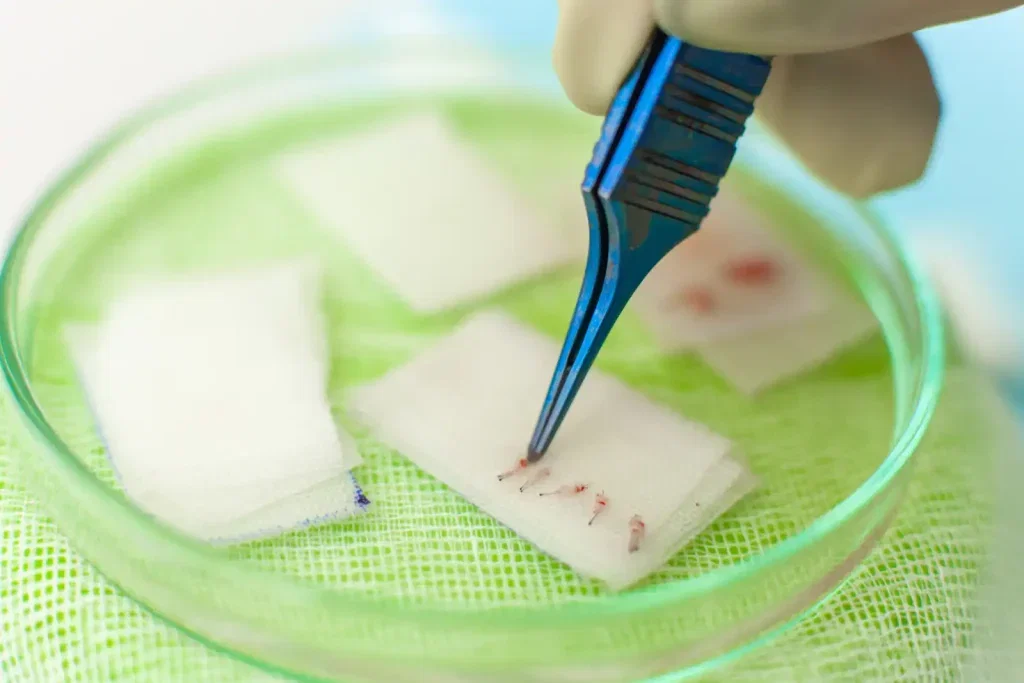
In practice, a provider harvests a small number of follicles in a short, in-office procedure, and those follicles are then tested and cryogenically preserved in a lab. The banked cells sit in storage as a kind of biological insurance policy. If cloning matures into a clinical reality, something the coverage suggests could be roughly a decade away, you’d have preserved material ready to use.
That timeline is the crucial detail for anyone considering a transplant today.
Proven now vs. promising later
Here’s the reality any honest clinic will acknowledge: cloning is not available today as a treatment. Neither is a new generation of hair-loss drugs still working through trials, including a much-discussed oral medication that regulators may not even review until around 2028. These are genuinely promising developments, but they are years out, and some experts caution that the underlying biology is still being worked out. The coverage even includes a dissenting view that hair loss is often a systemic issue rather than a scalp-level one.
Meanwhile, hair transplantation remains one of the few restoration methods that reliably works today, and it’s been refined over decades. For someone actively losing hair now, waiting a decade for a technology that may or may not arrive on schedule isn’t really a plan.
So the practical solution is not to “wait for cloning.” It’s this:
- A transplant now addresses your loss with proven results, using techniques available and refined today.
- Banking follicles can complement that decision, preserving young cells as optional insurance against future thinning and future donor scarcity while the cloning science matures.
- Non-surgical support treatments such as growth-factor serums, exosome-based products, and peptide topicals can help maintain and protect results, and some are specifically suited to use after transplant surgery.
The takeaway for prospective patients
The hair-banking and cloning story is real, and it’s genuinely encouraging, especially because it’s aimed at the donor-supply problem that matters most to transplant candidates. But it’s a story about the future. Anyone weighing a transplant now should treat these breakthroughs as “promising, not proven,” make today’s decision based on today’s proven options, and view banking as an optional hedge rather than a reason to postpone.
If you’re not sure whether you have enough donor hair for the result you want or how future loss might affect a transplant done now that’s exactly the conversation to have with a qualified restoration physician before you decide anything.