
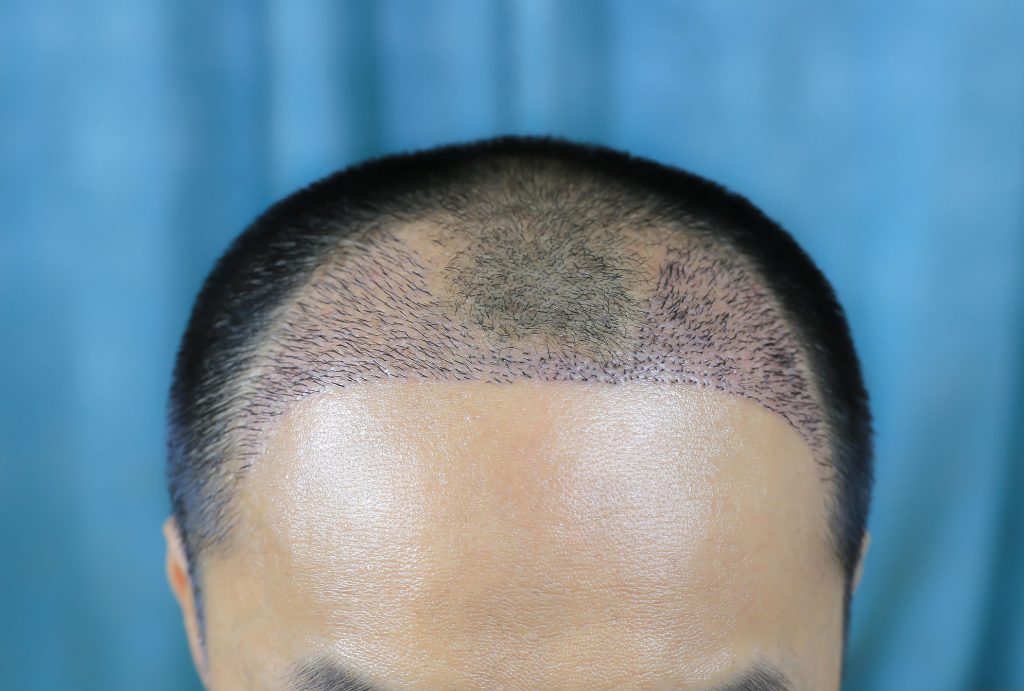
UK hair restoration surgeons are calling for everyone who performs hair transplant surgery to be regulated. They say more patients are getting poor results from clinics that operate with little oversight.
The surgeons spoke to ITV Cymru Wales for an episode of Wales This Week titled Hair Transplants: The True Cost, which aired on Friday, October 16, 2026. They described a UK market worth more than £100 million in which surgeon-led clinics operate alongside practitioners with far less training.
One surgeon compared the sector to the “wild west.” Another said that at many clinics, the person making thousands of incisions in a patient’s scalp is not a doctor.
With no complete list of providers and unclear rules on who may perform the surgery, patients currently have to find out for themselves who will do their procedure.
Calls to regulate every practitioner
Dr. Ted Miln, a hair transplant surgeon in St Athan, Vale of Glamorgan, told the program he wants every person who performs hair transplant surgery to be regulated. He said some people working in the field have little experience and inadequate qualifications.
Many of Dr. Miln’s patients are dealing with the psychological effects of androgenetic alopecia, the common hereditary form of hair loss, including a sense that they have lost part of their identity. Patients in that state can be drawn to cheap offers and quick bookings.
Dr. Miln’s practice operates from a building registered as an independent hospital with Healthcare Inspectorate Wales (HIW), which registers, inspects, and regulates independent healthcare services in Wales. He said hair restoration should meet the same medical standards as other surgery. HIW asks the public to report any service they think is operating without the required registration.
Why the rules are unclear
The problem is a gap in the law. In England, a clinic that performs hair transplant surgery must register with the Care Quality Commission (CQC), and the doctors involved must be registered with the General Medical Council (GMC). But no UK law says who may perform the surgical steps themselves. BAHRS and other professional bodies say only GMC-registered doctors should harvest grafts and make incisions, but that is a professional standard, not a legal requirement. As ITV’s report noted, the result is real uncertainty over who can legally and responsibly do the surgery. Our UK safety guide explains the rules in detail.
Dr. Chris D’Souza, president of the British Association of Hair Restoration Surgery (BAHRS), said it is hard to know how many transplants go wrong. Dr. D’Souza, who runs The D’Souza Clinic in London, said many clinics operate with little visibility, and the UK has no central list of hair transplant providers. He said botched procedures are increasing worldwide and that an industry is hard to regulate when no one can see what happens inside it.
The Welsh Government told ITV that anyone performing hair transplants should be properly trained and meet the standards set by professional regulators.
Who makes the incisions
Xavier Rush, a former New Zealand All Blacks player and former Cardiff Blues captain, runs Head Quarters (HQ) Hair Transplants in Cardiff. He said the clinic performs about 40 transplants a month and that about 20% of them repair botched or unsatisfactory procedures done elsewhere. Rush has had three transplants himself after losing his hair, which he found very distressing.
Dr. Rahman Hayat, a surgeon at HQ, described two types of clinic that patients will find in the UK:
- Technician-led clinics. A surgeon draws the hairline, and a technician, sometimes with four or five weeks of training, does most of the procedure, including extracting the hair.
- Surgeon-led clinics. These usually cost more, and the surgeon performs the surgical steps. Dr. Hayat said surgeons at his clinic typically do one operation a day.
Dr. Hayat said only doctors should make incisions. A typical procedure can involve about 3,000 small cuts, which add up to roughly eight meters (26 feet) of incision. He said anyone who cannot manage the complications that may follow should not be performing them.
BAHRS runs a public awareness campaign called Who Makes The Cut that warns prospective patients about black-market hair transplant surgery. The association represents both technicians and surgeons. It says technicians are essential for counting and placing grafts but recommends that they not make incisions.
Dr. D’Souza advises patients to ask the clinic who will perform each surgical step and to get a specific answer.
Rules and enforcement vary by country
The gaps in the UK are not unusual. Many patients travel abroad for a hair transplant, and the protections they get depend on where they have surgery. Our safety guides rate 17 countries on two separate measures: what the law requires, and whether it is enforced.
The two often don’t match. Turkey, the world’s largest hair transplant destination, has rules written specifically for the procedure and bars technicians from making incisions. But it has no public registry for checking a doctor, and we rate its enforcement as limited relative to the size of its market. Mexico also has strong rules on paper and limited enforcement.
The US draws a clearer line than the UK. Every state treats hair restoration surgery as the practice of medicine, so unlicensed technicians may not harvest grafts or make incisions. Medical boards in New York, California, Florida, and Virginia have disciplined physicians who allowed it, though enforcement still depends mostly on patients filing complaints.
| Country | Rules | Enforcement | Can technicians do surgical steps? | Public doctor registry |
|---|---|---|---|---|
| Australia | Strong | Strong | No, the doctor operates | Free, national |
| Belgium | Strong | Strong | No, doctors only | Free |
| Turkey | Strong | Limited | Partly, but not incisions | None |
| Mexico | Strong | Limited | No, but it happens | Free, by name |
| USA | Moderate | Moderate | No, but it happens | Free, national |
| UK | Moderate | Moderate | Not banned by law | Free |
A strong law protects you only if someone enforces it, and a weak one leaves more of the checking to you. Going abroad adds another layer, because complaints, follow-up care, and legal claims are harder to pursue once you’re home. Before booking anywhere, read the guide for the country where you’ll have surgery.
What to check before a hair transplant
Until the rules change, patients need to vet clinics themselves. Most problems can be spotted before you pay a deposit, and the key checks are free.
Based on the issues raised in ITV’s report and our country guides, these are the checks we recommend wherever you have surgery:
- Ask in writing who will perform your donor harvesting and recipient-site incisions, by name, and what technicians will do during the procedure. If the clinic won’t answer, don’t book.
- Check the clinic’s registration. In England, search the CQC, confirm that “surgical procedures” is listed for the location where you’ll be treated, and read the latest inspection report. In Wales, Scotland, and Northern Ireland, check HIW, Healthcare Improvement Scotland, or the RQIA.
- Check the doctor. In the UK, use the GMC’s free online register. In the US, search DocInfo, the Federation of State Medical Boards’ free national lookup, and then the medical board of the state where you’ll be treated.
- Make sure the doctor who will operate takes your consent personally. In the UK, GMC guidance requires it.
- Take time to decide. The CQC advises waiting at least two weeks after your consultation with the operating surgeon before having surgery.
- Get the full price, deposit terms, aftercare, and revision policy in writing.
- Be cautious of prices far below the local market. Our guides treat anything well under about £4,000 in the UK or $5,000 in the US for a full FUE session as a warning sign.
Each country guide includes a step-by-step verification checklist, country-specific red flags, and a ready-to-send email of questions for the clinic:
- Hair Transplant Safety in the UK
- Hair Transplant Safety in the USA
- Hair Transplant Safety in Turkey
- Hair Transplant Safety in Mexico
- Hair Transplant Safety by Country, comparing all 17 countries
When you’re ready to compare clinics, our clinic directory lists more than 1,300 clinics worldwide and shows where we have verified a doctor’s qualifications against an official source.