
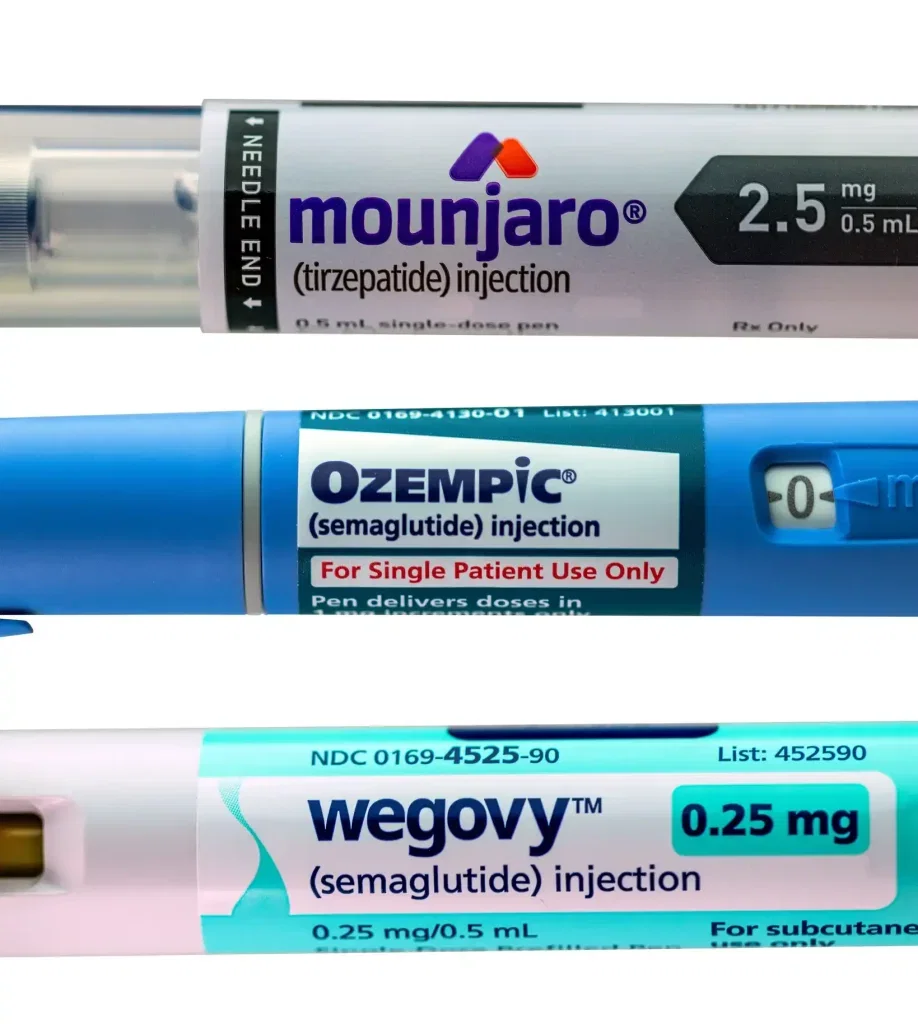
A newly published systematic review has added significant weight to growing concerns that GLP-1 weight loss medications such as Ozempic, Wegovy, Mounjaro and Zepbound may trigger noticeable hair loss, particularly during periods of rapid weight reduction.
The study, titled “GLP-1 therapies and hair loss: A systematic review of current evidence and implications for counseling,” was published in April 2026 in the journal Science Progress. The research team, which included dermatologist Dr. Paradi Mirmirani of Kaiser Permanente Vallejo and the University of California, San Francisco, evaluated 133 studies and analyzed 24 that met strict inclusion criteria. Their findings provide the clearest picture yet of how this fast-growing class of drugs may be affecting hair health worldwide.
Semaglutide and Tirzepatide Show the Highest Risk
Among the GLP-1 receptor agonists examined, semaglutide (the active ingredient in Ozempic and Wegovy) and tirzepatide (Mounjaro and Zepbound) were associated with the highest incidence rates of hair loss and the strongest signals in pharmacovigilance databases. Tirzepatide, which is also linked to the greatest magnitude of weight loss, was most frequently associated with telogen effluvium — a diffuse shedding pattern triggered by physiological stress.
Older GLP-1 medications including liraglutide, dulaglutide, lixisenatide and exenatide were examined far less often in the literature but generally appeared to carry a lower reported risk.
The authors also found that hair loss linked to semaglutide appears to be dose-dependent. Lower doses, typically those under 2 mg weekly used to manage Type 2 diabetes, were rarely implicated. The higher doses prescribed for obesity treatment were much more commonly associated with shedding. Women appeared to be disproportionately affected — a pattern Dr. Mirmirani has attributed in interviews to the fact that women tend to lose more weight on these medications and therefore experience the metabolic shock that drives shedding.
Two Types of Hair Loss Reported
The review identified two main patterns of hair loss in patients taking GLP-1 medications:
Telogen effluvium is a temporary, diffuse thinning across the entire scalp that occurs when a physical stressor — in this case, rapid weight loss or nutritional deficiency — pushes a large percentage of hair follicles into the resting phase. It is typically reversible once the underlying trigger is addressed.
Androgenetic alopecia is genetically driven pattern baldness. The authors propose that rapid GLP-1-induced shedding may “unmask” underlying androgenetic alopecia in susceptible individuals, making existing thinning patterns more visible. Hormonal fluctuations associated with rapid fat loss may also play a role.
A separate 2025 meta-analysis of more than 84,000 participants found that people taking GLP-1 medications were roughly 3.4 times more likely to experience hair loss compared with those not taking the drugs.
What Patients Can Do
The good news, according to Dr. Mirmirani, is that GLP-1-related shedding is “usually temporary, reversible, and manageable.” Her clinical recommendations include avoiding prolonged severe caloric restriction, maintaining steady rather than rapid weight loss, and prioritizing a diet with adequate protein, iron and vitamin B12. Over-the-counter topical minoxidil can also help stimulate regrowth in patients experiencing active shedding.
For most patients, hair density returns once weight loss stabilizes and nutritional intake improves. However, individuals with a genetic predisposition to pattern baldness may find that a GLP-1-triggered shedding episode reveals underlying androgenetic alopecia that does not fully reverse on its own.
In those cases, evaluation by a board-certified dermatologist or qualified hair restoration specialist is essential to distinguish between temporary shedding and permanent miniaturization. Patients whose pattern hair loss has progressed beyond what medical therapy can address may want to discuss longer-term options, including follicular unit extraction (FUE) and follicular unit transplantation (FUT) procedures, with an experienced clinic.
As GLP-1 prescriptions continue to climb worldwide, both prescribers and patients should be aware of this side effect — informed, not alarmed, as Dr. Mirmirani put it — and prepared to act early if shedding becomes a concern.