
Get a hair transplant quote today and it may well arrive with a menu of extras: platelet-rich plasma (PRP) before and after surgery, a laser cap for home, hyperbaric oxygen sessions, or “exosome” injections promising faster growth.
The pitch is always similar: help your grafts survive, heal faster and see results sooner. But how much of it holds up? We looked at the research behind the most common pre- and post-transplant treatments to separate what’s proven from what’s promising, and what’s mostly marketing.
Why the weeks around surgery matter
To see why these treatments exist, it helps to know what a graft goes through. Each follicular unit is removed from the donor area and spends time outside the body before it’s implanted. Once placed, it has no blood supply of its own. For several days it survives on oxygen diffusing from the surrounding tissue while new capillaries grow in.
That window is when grafts are most vulnerable to drying out, physical trauma and ischemia-reperfusion injury, the damage that happens when blood flow returns to oxygen-starved tissue.
Then comes the part that alarms many patients. Two to four weeks after surgery, most transplanted hairs shed as their follicles enter a resting phase. Some native hairs nearby may fall out too, a temporary effect known as “shock loss.” New growth usually starts around three to four months, and the final result takes 12 to 18 months.
Nearly every add-on targets one of three goals: protecting grafts in that early window, shortening the shedding phase, or protecting the native hair the transplant doesn’t replace.
Finasteride and minoxidil: the least glamorous, best supported
Finasteride blocks the conversion of testosterone to DHT, the hormone behind male pattern hair loss. It doesn’t need to protect transplanted hair, which comes from DHT-resistant donor zones. Its job is to stabilize the native hair around it, so the transplant doesn’t end up as an island in thinning hair.
In a 2005 randomized, double-blind trial in Dermatologic Surgery, Leavitt and colleagues gave 79 men finasteride or a placebo from four weeks before their transplant until 48 weeks after. Visible increases in hair on the top and front of the scalp were seen in 94% of the finasteride group versus 67% on placebo. The ISHRS 2025 Practice Census found that 72.3% of surveyed surgeons frequently prescribe it before and/or after surgery.
Minoxidil, originally a blood pressure drug, boosts scalp blood flow and prolongs the hair’s growth phase. In a 1989 study by Paris surgeon P. Bouhanna, 16 patients used topical minoxidil before and after surgery, and about 71% of their 64 grafts kept growing without the usual shedding. It used the larger grafts of that era, so it’s an early signal rather than proof. Surgeons now use minoxidil to limit shock loss and speed regrowth, though timing varies from days to a few weeks after surgery.
Both drugs have trade-offs to discuss with a doctor. Finasteride can cause sexual side effects in a minority of men and isn’t for women who are or may become pregnant. Minoxidil can irritate the scalp and trigger a brief shed of its own.
PRP: plausible, popular and modestly supported
PRP is the most studied “regenerative” add-on. A small sample of the patient’s blood is spun to concentrate the platelets, which release growth factors such as PDGF and VEGF that drive tissue repair and new blood vessel formation. In theory, that helps grafts re-establish a blood supply faster. Clinics use it in three ways: scalp injections before surgery, as a storage solution for grafts during the procedure, or as injections afterwards.
The evidence points in the right direction but is limited. In an often-cited 2006 study of 20 men, Uebel and colleagues found areas implanted with grafts treated with platelet growth factors reached 18.7 follicular units per cm², versus 16.4 in untreated areas: a 15.1% gain. A 2025 systematic review found PRP was linked to higher density, better follicle survival and earlier growth across the studies it covered. But none used standardized evaluation tools, and most enrolled only 20 to 40 patients with differing preparation methods.
The clearest benefit appears to be speed, meaning faster healing and earlier regrowth, rather than proven gains in final graft survival a year on. PRP’s best-established role is actually outside surgery: placebo-controlled trials in pattern hair loss show modest density gains of around 10%, which may help preserve native hair around a transplant.
Graft holding solutions: the add-on you never see
One factor patients rarely ask about is the liquid grafts sit in before implantation. Many clinics use chilled saline. Others use specialized storage solutions such as HypoThermosol, sometimes with added ATP (a cellular energy molecule), or the patient’s own plasma.
In a stress model presented by BioLife Solutions, which makes HypoThermosol, grafts stored cold for five days, far longer than any real procedure, showed zero survival in saline versus 44% in HypoThermosol and 72% with added ATP.
A note on HypoThermosol: those figures come from the manufacturer and haven’t been confirmed by independent clinical trials. In the 2023 textbook Hair Transplantation, surgeon Jerry Cooley, who has worked with BioLife on HypoThermosol research, writes that there are no high-quality studies comparing holding solutions and that none has regulatory approval for this use. He estimates experienced surgeons already reach around 90% graft survival, leaving an optimized solution a theoretical 5 to 10% to add. Careful handling, avoiding cut, crushed or dried-out grafts, matters more.
Low-level laser therapy: good for native hair, unproven for grafts
Also called red light therapy or photobiomodulation, LLLT uses low-energy red and near-infrared light thought to boost energy production in follicle cells. Several devices are FDA-cleared for pattern hair loss, and controlled trials support modest density gains with regular use.
Evidence for transplant recovery specifically is thin. A 2016 double-blind randomized trial gave extracted grafts a single laser session before implantation and found no significant effect on outcomes, though the authors called for larger studies. Laser caps are low-risk and may help native hair long term, but there’s little proof they improve graft survival or speed growth.
Hyperbaric oxygen: early but intriguing
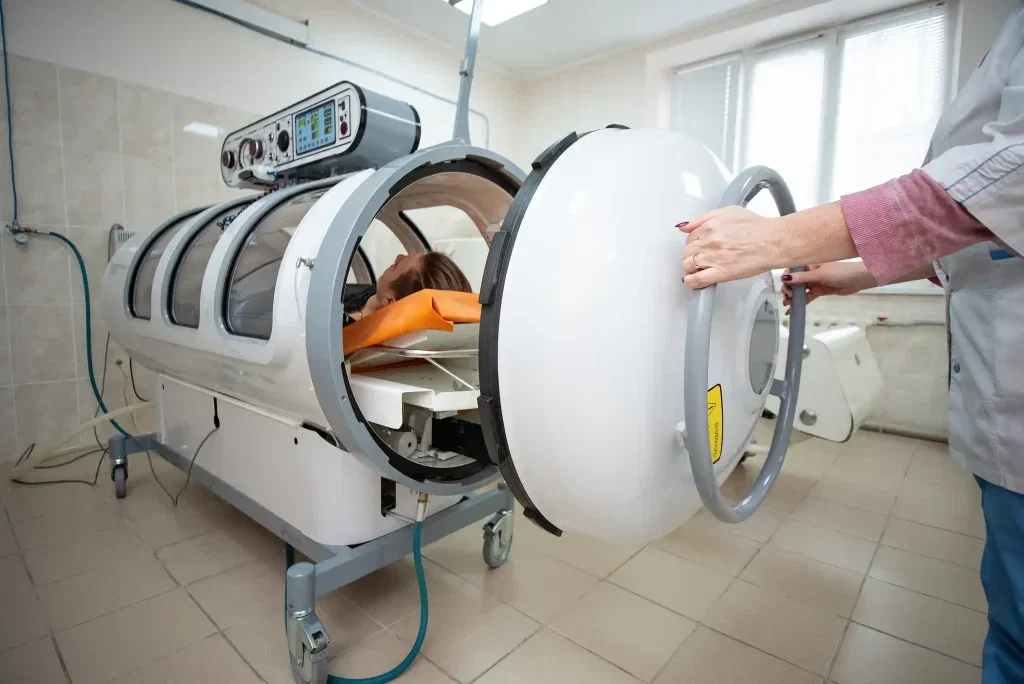
Hyperbaric oxygen therapy (HBOT) means breathing pure oxygen in a pressurized chamber, which raises oxygen levels in blood and tissue.
In a 2021 randomized trial in the Journal of Cosmetic Dermatology, 34 FUE patients were split into two groups, one of which also received daily HBOT for seven days after surgery. The HBOT group had less post-surgical shedding, plus less folliculitis and itching. A December 2025 case report of five patients found scabbing cleared within three to five days with daily sessions. These studies are small, and HBOT is costly and not widely available, so it remains an optional extra.
Exosomes: the most hype, the least proof
Exosomes are tiny particles cells use to signal to one another, and they’ve become aesthetic medicine’s buzzword. Some clinics now offer exosome injections around a transplant to “supercharge” growth.
The science is at an early stage. Most supporting data come from cell cultures and animal studies. Human studies have been small, largely uncontrolled and often paired with microneedling, which can stimulate hair on its own. The FDA says there are no approved exosome products and has sent warning letters in 2025 and 2026 to companies marketing them, including for hair growth claims. In May 2026 it also warned consumers about injecting unapproved human cell and tissue products after a patient’s death.
Mayo Clinic dermatologist Dr. Saranya Wyles told the 2025 American Academy of Dermatology meeting that exosomes have real potential, but approvals remain years away. If you’re offered them, you’re paying for an experimental treatment, so ask exactly what product is used and where it comes from.
Proven now vs. promising later
- Best evidence: finasteride and minoxidil. Cheap, well studied and recommended by most surgeons, mainly to protect native hair and reduce shedding.
- Reasonable but modest: PRP and quality holding solutions. Biologically plausible with supportive small studies. The benefit is mostly faster healing and earlier growth.
- Low risk, unproven for grafts: laser therapy. Useful for ongoing hair loss, with little data on transplant outcomes.
- Early stage: hyperbaric oxygen. Promising small studies, but costly and hard to access.
- Experimental: exosomes. No approved products and minimal human evidence.
The takeaway for prospective patients
No add-on can make up for poor surgical technique. Graft survival depends mostly on how carefully follicles are extracted, handled and implanted, and how long they spend outside the body. As our recent coverage of the rise in botched procedures shows, choosing the right surgeon is still the biggest decision you’ll make.
When a clinic offers extras, ask what each is meant to achieve, what evidence supports it, and whether it’s included or billed separately. A good surgeon will tell you honestly which add-ons are likely to help you and which are optional.
Ready to start? Compare hair transplant clinics in our global directory.