
Why Your Surgeon’s Tools Matter: The New “Human-First” Hair Transplant Pen
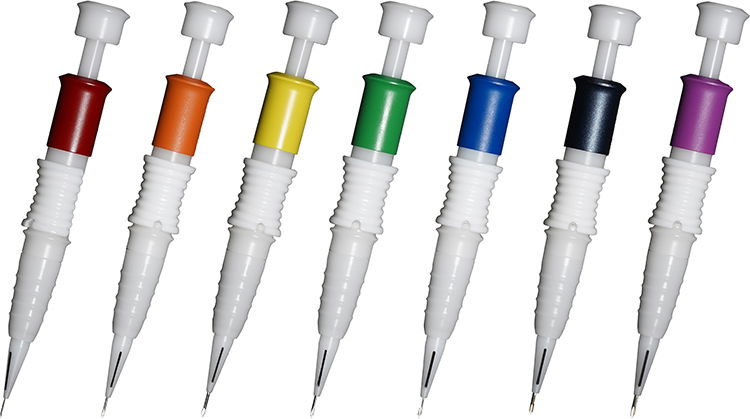
When we talk about hair transplants, we usually focus on the “before and after” photos. We talk about the number of grafts, the hairline design, and the final thickness. But there is a silent hero in the operating room that determines how smoothly your surgery goes: the implanter pen.
In a recent study, Dr. Jae Hyun Park, a surgeon at a hair transplant clinic in South Korea, revealed that the way these tools are designed is changing. It’s no longer just about how sharp the needle is; it’s about human-factor engineering. For a patient, this means a more consistent, efficient, and precise procedure. Here is why this “human-first” design is a game-changer for the hair restoration industry.
The Marathon of Microsurgery
A typical hair transplant isn’t a quick fix; it’s a surgical marathon. Your surgeon and their team must place thousands of individual hair follicles, one by one, often over 6 to 10 hours.
During this time, the surgeon is looking through high-powered magnifying glasses (loupes). In this tiny, magnified world, even a small mistake—like the needle being turned a few degrees the wrong way—can happen hundreds of times if the tool isn’t easy to use. This leads to “surgeon fatigue,” which is the enemy of a perfect result.
Three Ways Better Design Protects Your Results
Dr. Park’s research moves away from just “making a sharper needle” and focuses on making a tool that works with the human hand and eye.
- “Feel” Over “Sight” (Tactile Guidance) Under a microscope, it’s hard to see exactly which way a microscopic needle is pointing. Dr. Park’s design uses tactile ridges and color-coded lines on the handle. This allows the surgeon to feel the orientation of the hair graft without having to stop and look at the needle tip every single time. This keeps the “surgical rhythm” going and ensures every hair is angled perfectly.
- Color-Coded Safety During surgery, a team uses different needle sizes for different types of hair (single hairs for the hairline, groups of three for the crown). To prevent mistakes, this new design uses a unified color system for every part of the pen. If the handle is blue, the needle is blue. This creates a “shared language” between the doctor and the assistants, making the hand-off fast and error-free.
- The “One-Touch” Exchange Needles can get dull after hundreds of pokes. In older designs, changing a needle was a clunky process that broke the surgeon’s concentration. This new framework uses one-touch disassembly. It’s like a quick-release mechanism that allows the team to swap needles in seconds, so the surgeon never has to take their eyes off your scalp.
Why This Matters to You
You might wonder: Does the tool really change my hair? While a tool doesn’t replace a surgeon’s skill, a better-designed tool makes that skill easier to apply consistently from the first hour of surgery to the eighth. When a tool is designed for “human factors,” it reduces the chance of:
- Graft trauma: Caused by fumbling with clunky instruments.
- Incorrect angles: If a surgeon gets tired and loses track of the needle’s “bevel.”
- Longer surgery times: Which can be exhausting for the patient.
The Bottom Line
Dr. Park’s methodology reminds us that a hair transplant is a partnership between a doctor and their instruments. By prioritizing ergonomics and visibility, clinics can ensure that the “marathon” of hair restoration is run with more precision and less fatigue than ever before.