
Veradermics Goes Public With a Blockbuster IPO — What Its Hair Regrowth Pill Could Mean for Your Hair Transplant
If you’ve been researching hair restoration options, a major development hit Wall Street this week that’s worth your attention. Veradermics (NYSE: MANE) made a dramatic entrance onto the public markets, and its lead drug candidate — an oral hair regrowth pill called VDPHL01 — could change the way patients and their doctors approach hair loss treatment, including how hair transplants are planned, performed, and maintained.
The New Haven, Connecticut-based biotech priced its upsized initial public offering at $17 per share on February 3, raising approximately $256.3 million. When shares began trading on the New York Stock Exchange the following day, they more than doubled, opening at $34 and surging as high as $40 before settling around $37.75 — a 122% gain on day one. Pharmaceutical giant Eli Lilly has signaled interest in acquiring up to 4.9% of the company’s shares, and the IPO was oversubscribed with backing from major institutional investors. Clearly, the financial world sees something significant here.
But what does it actually mean for someone dealing with hair loss?
The Problem VDPHL01 Is Trying to Solve
Pattern hair loss — the gradual thinning that affects an estimated 80 million men and women in the United States — has been stuck with essentially the same treatment options for decades. Topical minoxidil (best known as Rogaine) has been around since 1988, and while it works for some people, the reality is discouraging: according to Veradermics’ FDA filing, about 86% of users quit within the first year because the results are modest, inconsistent, and the twice-daily scalp application is messy and inconvenient. Finasteride (Propecia), the only other FDA-approved option, is a hormonal treatment unavailable to women and comes with side-effect concerns that make many men reluctant to use it.
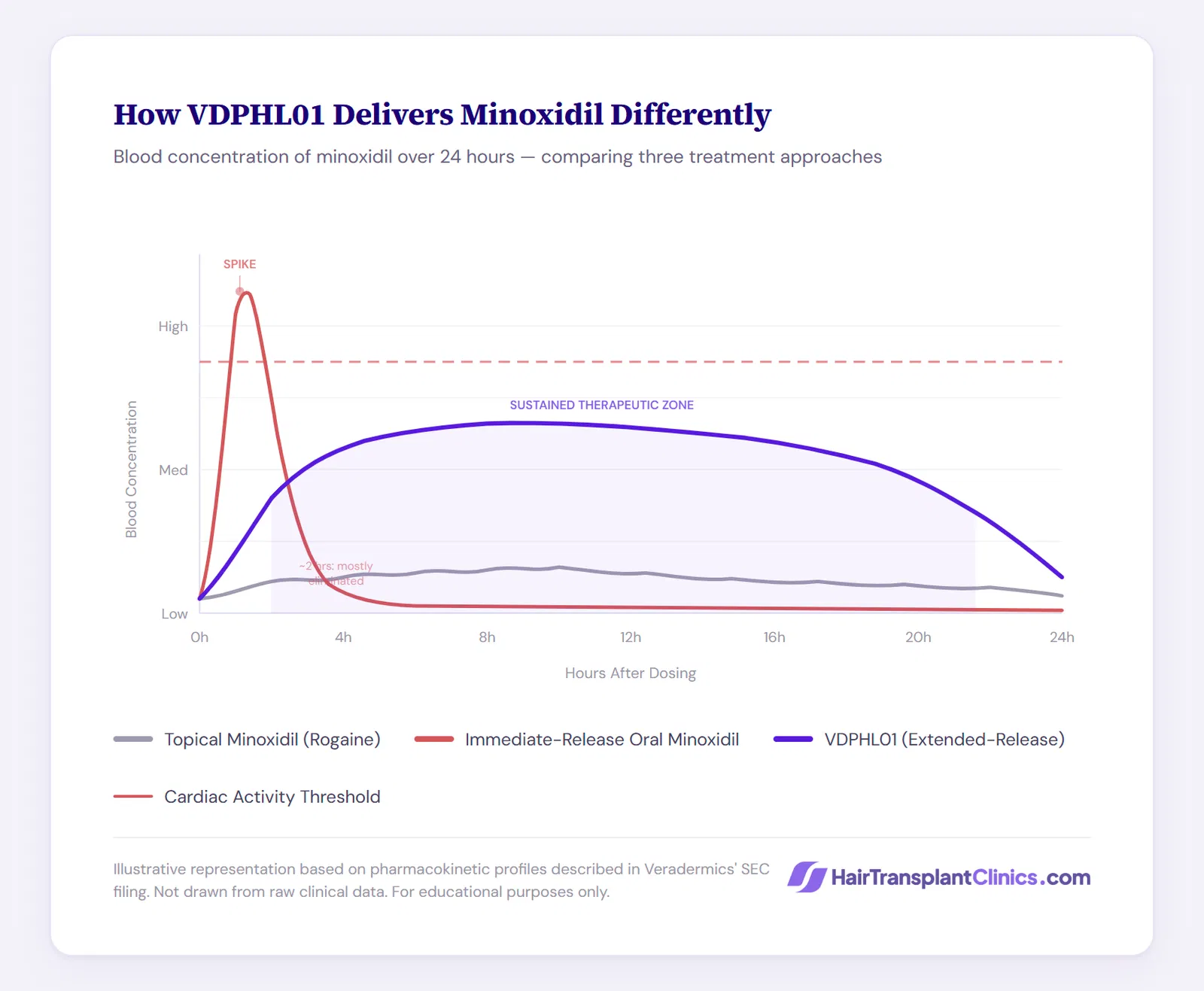
Some doctors prescribe regular oral minoxidil off-label for hair loss, but that version was originally designed to treat high blood pressure. It clears the body in roughly two hours — not long enough to meaningfully support hair follicles — and carries a black box warning about cardiac risks due to the sharp spike in blood concentration right after you take it.
VDPHL01 is Veradermics’ attempt to fix all of this. Using a proprietary extended-release technology, the pill is designed to keep minoxidil working in your system for 15 to 24 hours with twice-daily dosing, while keeping blood concentration levels below the threshold where cardiac side effects typically occur. In other words, it aims to give your follicles sustained, all-day exposure to a proven hair growth agent without the heart-related risks of the immediate-release version or the hassle of rubbing foam into your scalp.
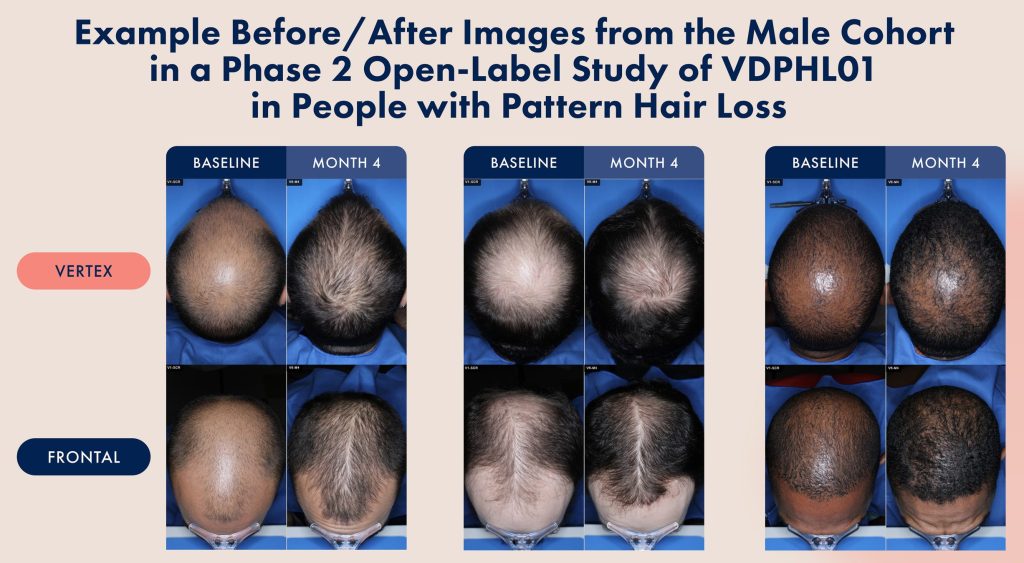
The early results are encouraging. In preliminary Phase 2 data released last October, 21 men taking VDPHL01 twice daily showed an average increase of 47.3 hairs per square centimeter after four months, with over 90% reporting visibly improved hair coverage. No cardiac adverse events were reported. Three larger, placebo-controlled Phase 3 trials are now underway — including, notably, the first-ever registration-directed trial of an oral treatment for female pattern hair loss. The first batch of pivotal results is expected in the first half of this year.
Why This Matters If You’re Considering a Hair Transplant
If you’re exploring hair transplant surgery — or you’ve already had one — VDPHL01 could be relevant to you in ways that go well beyond simply being an alternative to surgery. Many hair restoration professionals see an effective oral medication not as a replacement for transplants, but as something that could make surgical results significantly better. Here’s how.
Better Protection After Surgery
If you’ve researched hair transplants, you’ve probably come across the term “shock loss” — the temporary shedding that can occur in the weeks following a procedure when the stress of surgery pushes surrounding native hairs into a resting phase. It’s one of the most anxiety-inducing parts of the transplant experience. You invest thousands of dollars and then, for a period, your hair can actually look thinner than before the procedure. Existing post-operative regimens, often involving topical minoxidil, are inconsistent at preventing this, partly because compliance is difficult when you’re applying a messy solution to a healing scalp.
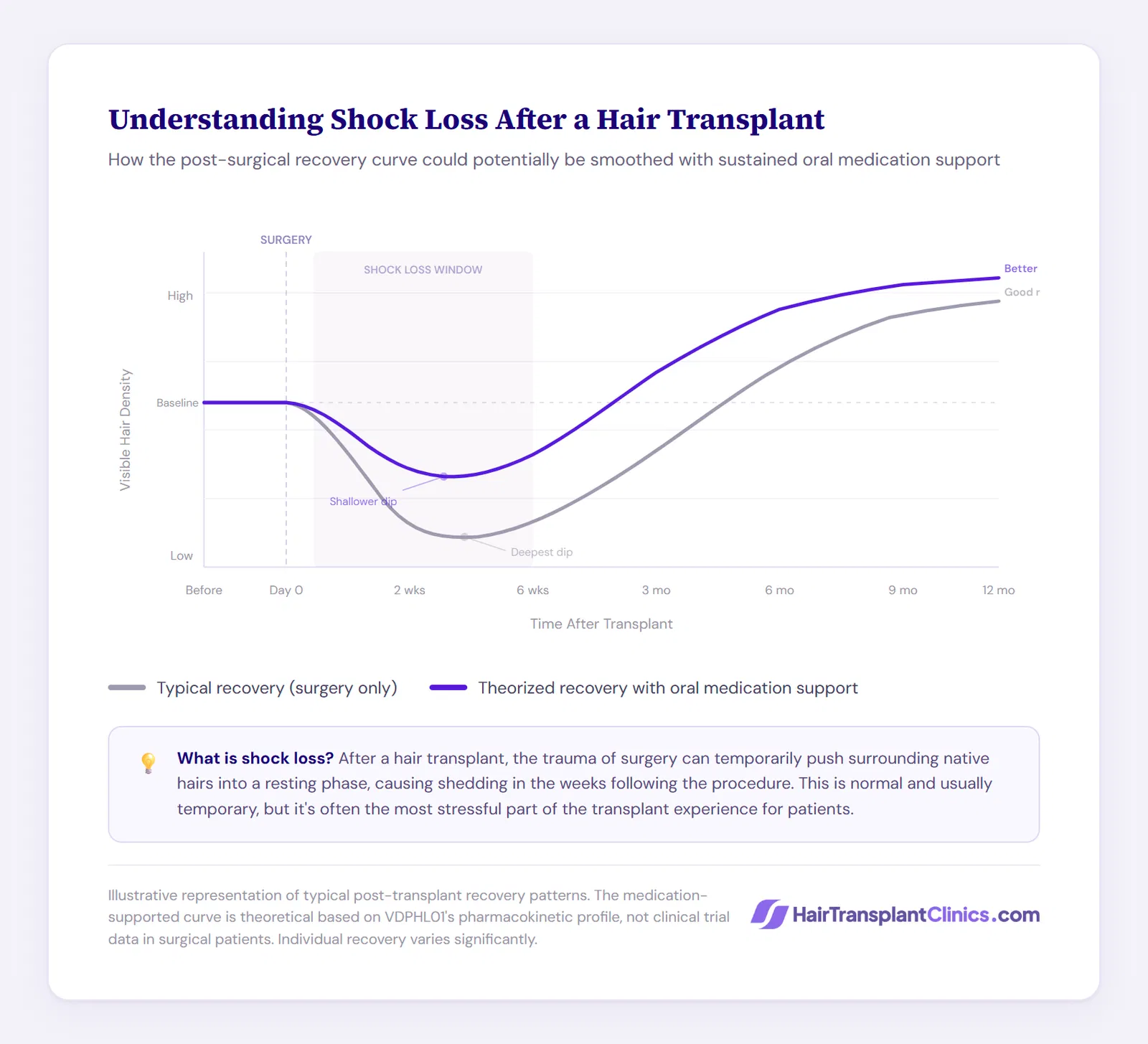
VDPHL01’s extended-release design could offer a more reliable form of post-surgical support. While Veradermics has not specifically studied the drug in a surgical recovery context, its pharmacokinetic profile — maintaining steady follicular stimulation throughout the day without the concentration spikes of immediate-release minoxidil — suggests it could help keep your native hairs in a stable growth phase during the critical weeks after a transplant. Think of it as a form of graft insurance: a simple daily pill that helps protect both your transplanted and existing hair while your scalp heals.
Opening the Door for Patients Previously Told “No”
Every hair transplant depends on the quality of your donor hair — typically the thicker, more resistant hair at the back and sides of your head. If your donor area is too thin or the remaining hairs are already miniaturizing, many surgeons will advise against surgery because they’d essentially be moving weak hair from one spot to another with limited benefit.
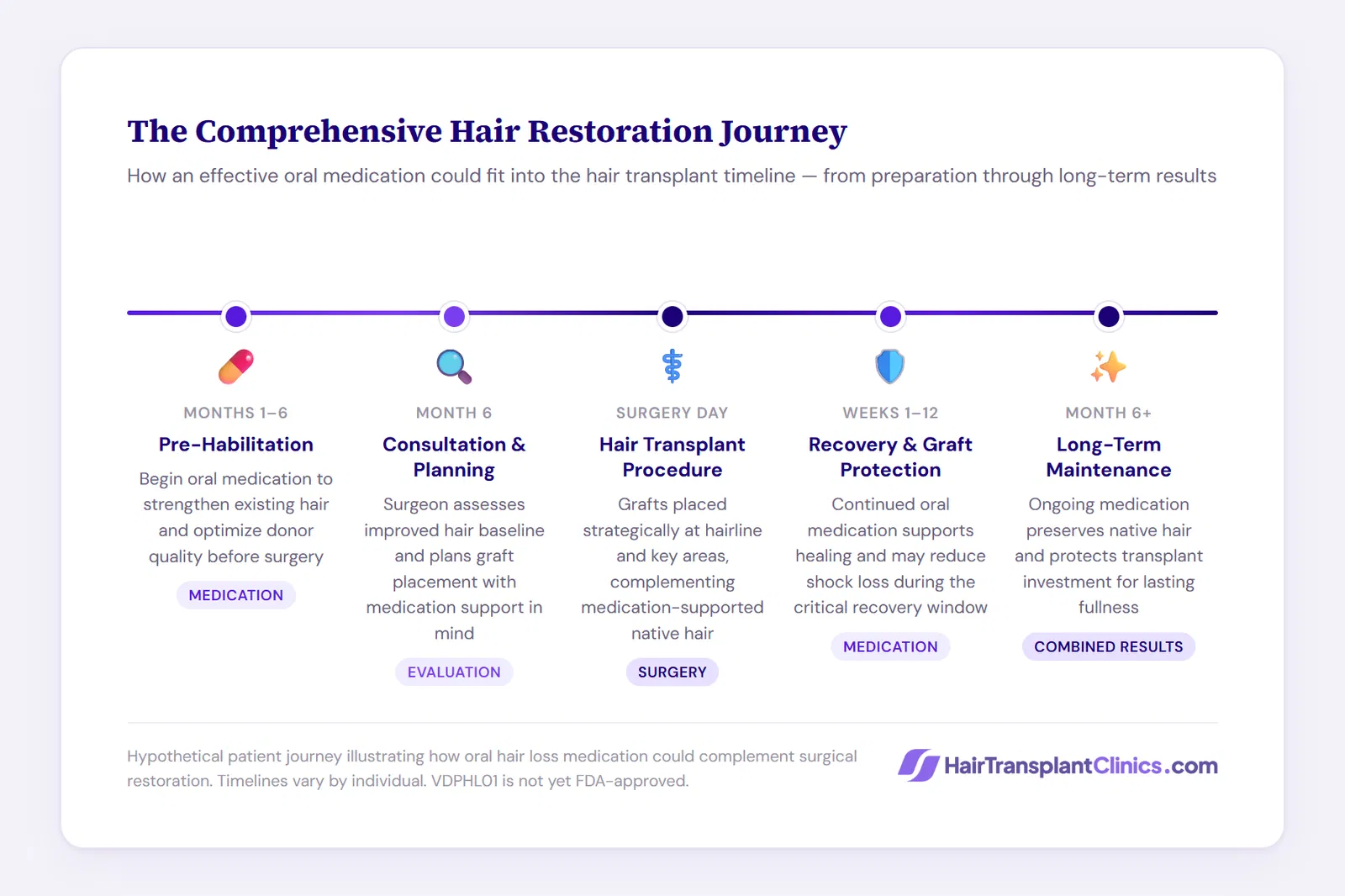
If a well-tolerated oral treatment can strengthen and rescue those miniaturizing hairs before surgery, the picture changes. Patients who were previously told they weren’t good candidates could potentially undergo a preparatory course of VDPHL01 — a kind of “pre-habilitation” — to improve their donor hair quality before a single graft is ever harvested. This could meaningfully expand who qualifies for surgical restoration and improve outcomes for patients with borderline donor supplies. While this application remains speculative pending further clinical data, it’s a possibility that has the transplant community paying close attention.
Fuller Results Than Surgery Alone
Here’s something that isn’t always made clear during consultations: a hair transplant is, at its core, an exercise in creating the illusion of density. Your surgeon works with a finite supply of donor grafts and must place them strategically to cover the largest area possible while maintaining a natural look. Even the most skilled surgeon or advanced robotic system has limits on what can be achieved with grafts alone. Typically, the priority is the hairline and temples — the areas that frame your face and have the greatest visual impact — while the midscalp and crown may receive thinner coverage.
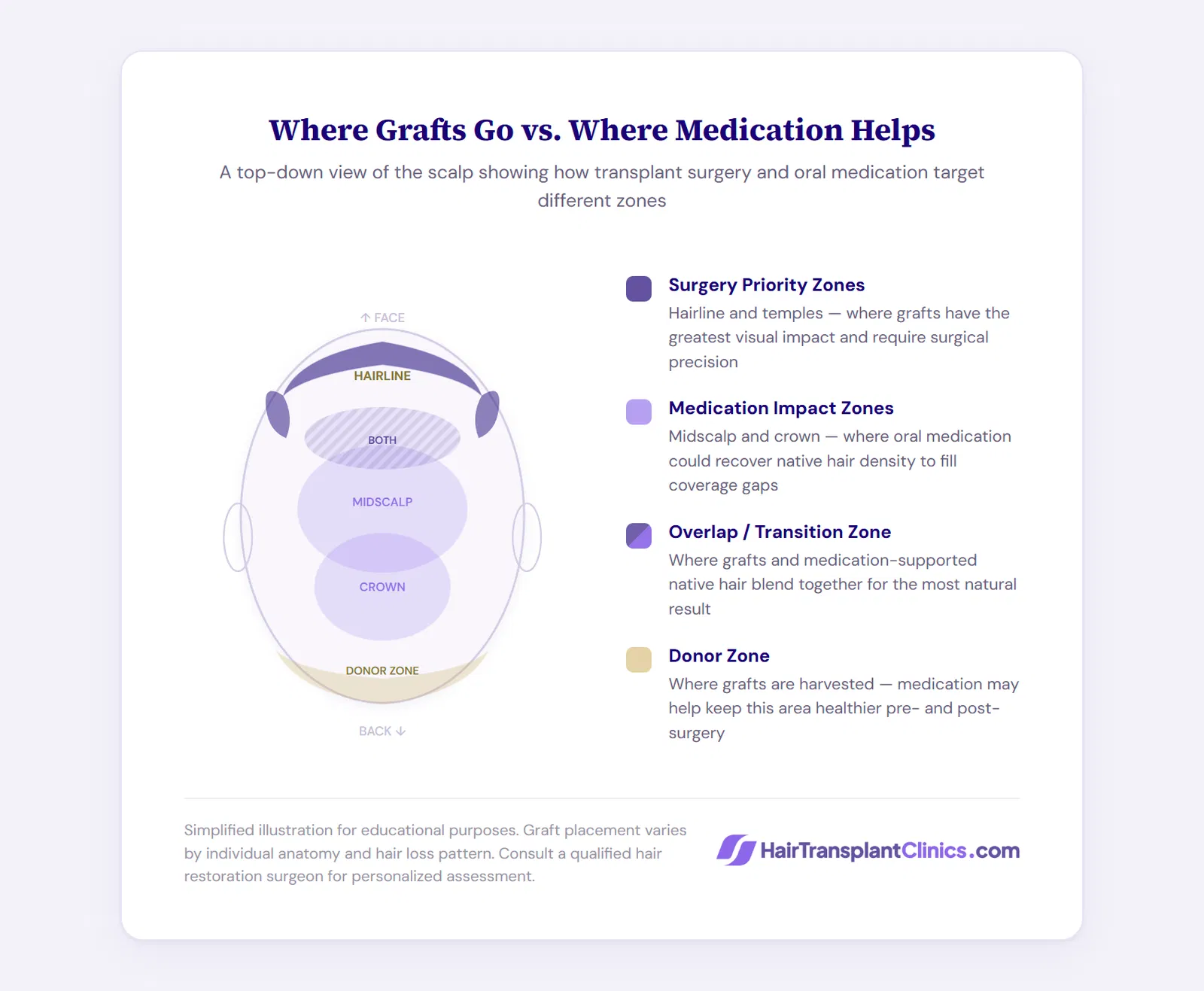
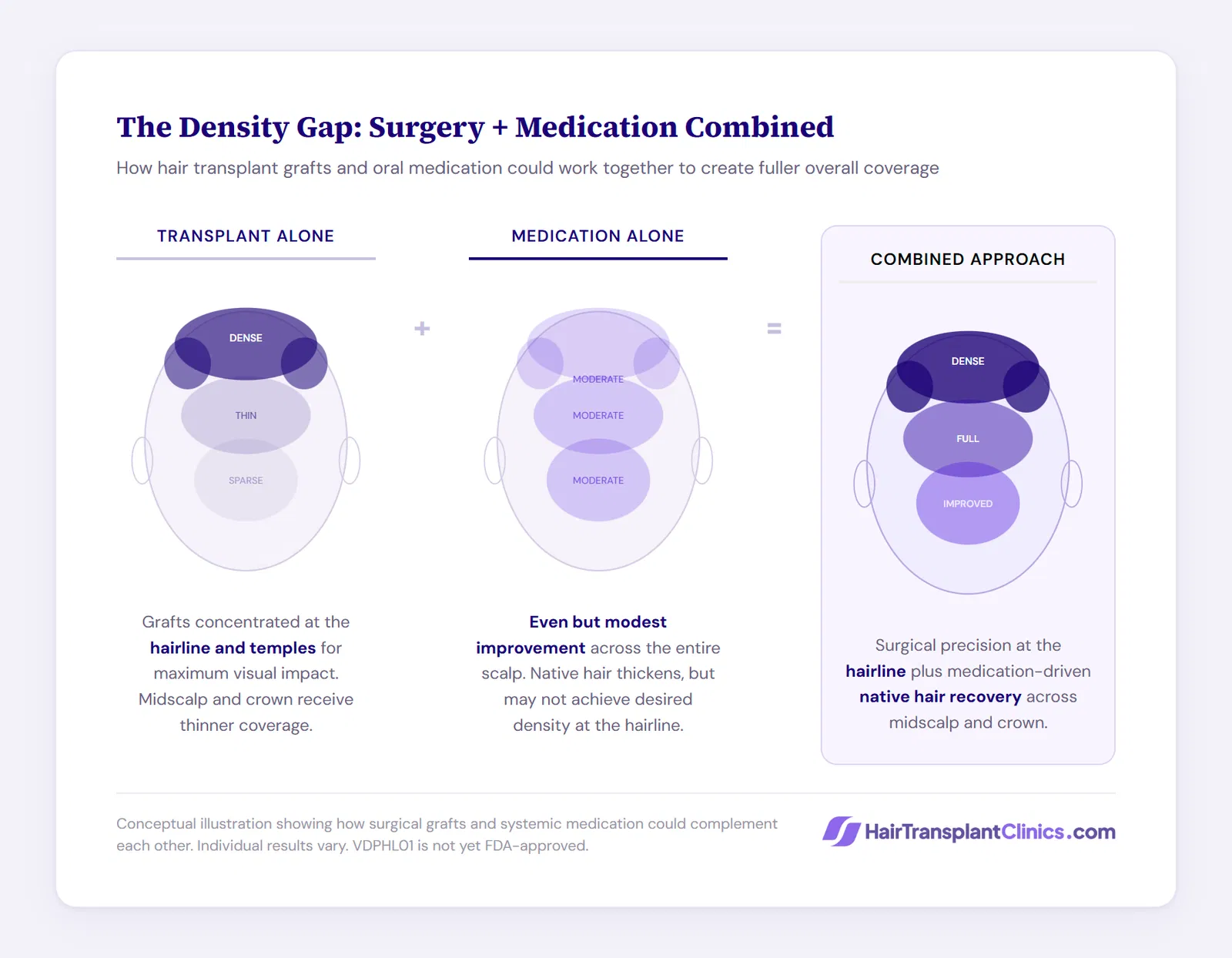
This is where VDPHL01’s early clinical data gets particularly interesting. An average increase of 47.3 hairs per square centimeter from the medication alone is the kind of native hair recovery that could fill in exactly the areas where transplants are thinnest. If those numbers hold up in the larger Phase 3 trials, a combined approach becomes compelling: your surgeon focuses their artistry on the hairline and the areas that matter most aesthetically, while the medication thickens and recovers your native hair across the rest of your scalp. The result could be a fullness and naturalness that neither surgery nor medication typically achieves on its own.
A Reason to Take That First Step
Perhaps the most important shift VDPHL01 could bring about is simply getting more people to take action. Veradermics’ own research found that 93% of people with pattern hair loss want to do something about it, yet only 9% are satisfied with their current treatment. The vast majority of people experiencing hair loss are effectively doing nothing — either because the available products have let them down or because the jump to surgery feels too drastic.
A genuinely effective daily pill with a manageable side-effect profile could be the entry point that changes this. For many people, starting on a medication and seeing real improvement will be enough. But for others — particularly those with more advanced loss — the results may be encouraging without being complete, and hair transplantation becomes the natural next step. The key difference is that these patients would arrive for a consultation already on a proven medical regimen, already seeing some improvement, and already committed to a long-term approach. That’s a far better starting point for surgical success than walking in cold.
What’s Still Unknown
It’s important to keep perspective. VDPHL01 has not yet been approved by the FDA, and the promising early results come from a small, open-label Phase 2 study. The three ongoing Phase 3 trials — larger, placebo-controlled, and more rigorous — will determine whether those numbers hold up. Cardiovascular safety will remain under close scrutiny given minoxidil’s history, even with the extended-release formulation’s improved profile. The company also faces emerging competition from other biotechs developing new hair loss treatments, including Pelage Pharmaceuticals and Cosmo Pharmaceuticals.
The global pattern hair loss treatment market is projected to exceed $30 billion by 2028, and Veradermics is positioned squarely in the middle of that opportunity. For patients, the practical takeaway isn’t to wait for a silver bullet — it’s to stay informed. If you’re considering a hair transplant, ask your surgeon about medical therapy as part of a comprehensive plan. And keep an eye on VDPHL01’s Phase 3 results as they roll in later this year. The era of treating hair loss with surgery or medication in isolation may be coming to an end — and the patients who benefit most will be those who embrace the full picture.